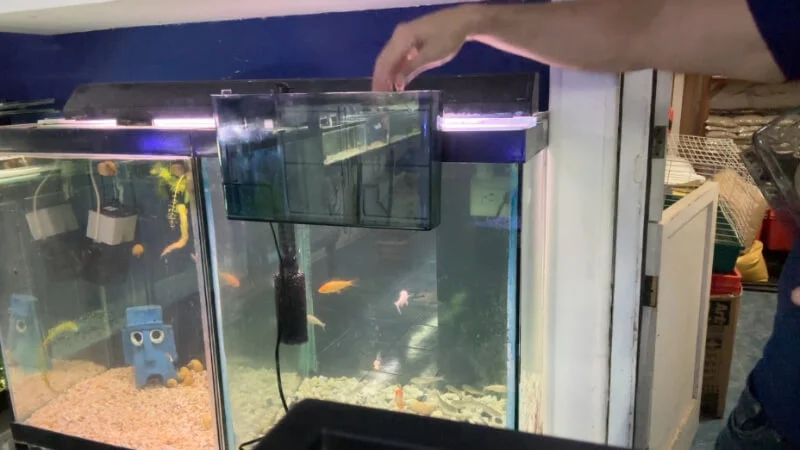
The hygger Flow Pro 315 GPH HOB filter is designed for aquariums from 40 to 75 gallons, and on paper it checks several useful boxes: adjustable flow, an intake sponge, accessible filter media, and a built-in clog indicator.
For this review, we installed the largest model on a 40-gallon aquarium and checked how easy it was to assemble, prime, adjust, and maintain. We also returned several days later to see whether the filter was actually catching visible debris.
The short version: the initial results were encouraging, but this is still an early-use review rather than a long-term durability verdict.
Quick Verdict
| Category | First impression |
|---|---|
| Installation | Straightforward |
| Priming | Manual, but simple |
| Flow control | Noticeably adjustable |
| Intake protection | Useful pre-filter sponge |
| Media access | Easy from the top |
| Mechanical filtration | Visible debris captured after several days |
| Noise | Typical HOB waterfall behavior |
| Long-term durability | Not yet tested |
| Actual flow under load | Not measured |
Table of Contents
🎥 Watch the Video: Installing and Testing the hygger HOB Filter
What We Tested
The model used for this review is the large hygger Flow Pro, currently rated by the manufacturer at 315 GPH and recommended for 40- to 75-gallon aquariums.
The intake tube is adjustable, and the filter includes an intake sponge, removable cartridges, biological media pads, adjustable flow, and a red maintenance indicator.
One important distinction: 315 GPH is the manufacturer’s maximum rated flow, not a measurement we independently confirmed with the media installed.
Real-world flow normally changes with media resistance, intake condition, water level, and how far the adjustment valve is opened.
Installation Was Mostly Straightforward
Assembly is simple once the intake pieces are oriented correctly.
The adjustable intake gives some flexibility for different aquarium depths, and the sponge sits over the lower intake opening.
That pre-filter sponge is one of the features we liked most.
It can:
- Block larger debris
- Reduce direct suction at the intake
- Add another surface for biological growth
- Help protect very small livestock
A similar intake sponge is something we already recommend when using HOB filtration with smaller fish. Our 20-gallon setup specifically looks for adjustable flow and an intake that can be protected with a pre-filter sponge.
The sponge will need cleaning, though. If debris clogs it, flow can drop noticeably.
You Need to Prime It Before Startup
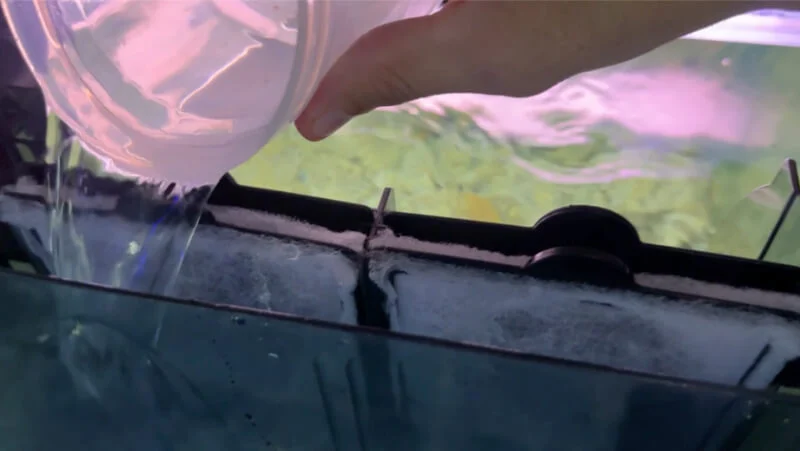
This filter is not a plug-it-in-dry-and-forget-it design.
After mounting it on the tank and adjusting the leveling knob, we filled the filter chamber with aquarium water before switching it on.
That step is called priming.
Once the chamber was filled, the filter established circulation and began returning water through the waterfall outlet.
If you’re new to HOB filters, this is worth remembering because running a water pump dry can interfere with startup and potentially damage the pump.
What’s Inside the Filter?
The unit we tested uses two removable cartridges along with two black biological filter pads.
The cartridges combine fibrous material with activated carbon.
That gives the filter multiple filtration functions:
Mechanical filtration
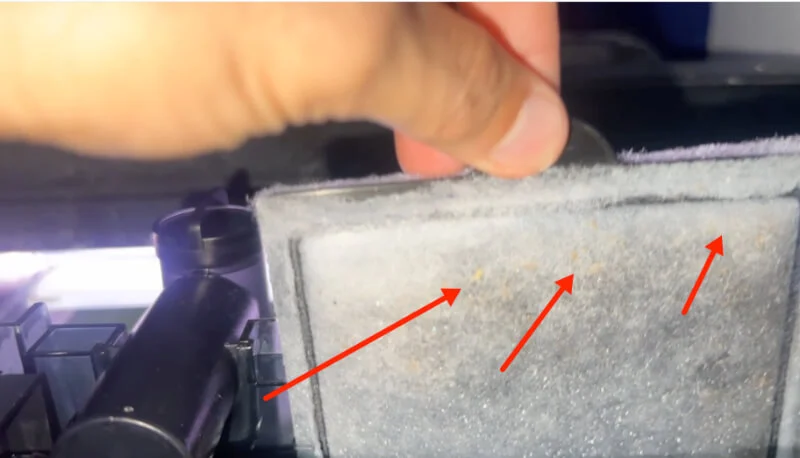
The fibrous material physically traps suspended debris.
This is the part we were able to evaluate most clearly because several days later, the cartridges had visibly collected particles and discoloration.
Chemical filtration
Activated carbon can adsorb certain dissolved organic compounds, odors, and discoloration.
It is useful in some situations, but chemical filtration is not mandatory in every freshwater aquarium.
Biological filtration
The additional pads provide surfaces where beneficial bacteria can establish.
Those bacteria help process ammonia through the nitrogen cycle.
One thing we would avoid is automatically throwing away every piece of media at the same time simply because the cartridge package says to replace it.
Established biological media has value.
Reusable media can often be gently cleaned when needed while disposable material is replaced separately.
The Adjustable Flow Actually Makes a Visible Difference
The flow-control knob produced an obvious change in the waterfall during testing.
At the higher setting, the filter created stronger circulation and more surface disturbance.
Turning it down noticeably softened the return.
That flexibility matters because fish do not all want the same current.
A moderately stocked community may benefit from stronger circulation, while slower-swimming fish can struggle if the entire tank becomes a treadmill.
Our filter selection guide goes deeper into matching flow and filtration style to the animals rather than selecting a filter based on GPH alone.
The best setting is the one that circulates the aquarium effectively without forcing the fish to fight the current constantly.
The Red Clog Indicator Is Clever
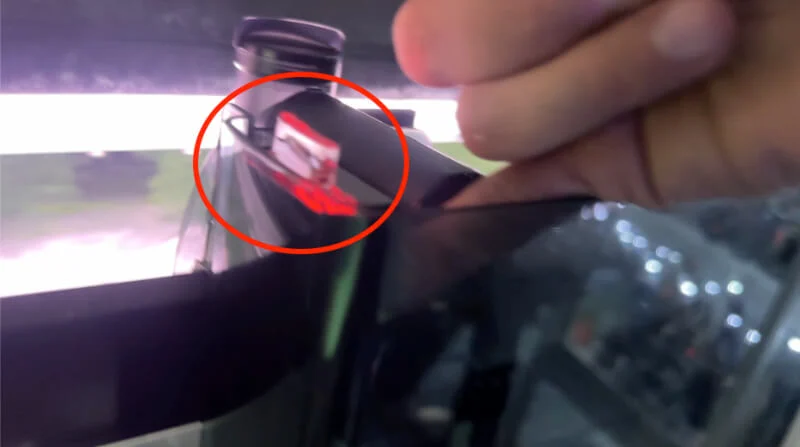
The most unusual feature is the red maintenance indicator.
As the mechanical media becomes restricted, water can rise inside the chamber. A float moves with that water level and triggers the red indicator.
During our initial test, we activated the float manually to demonstrate the system.
So to be clear:
The warning did not activate because brand-new media clogged during our test.
We simply verified how the mechanism operates.
Whether it remains reliable after months of mineral buildup and repeated maintenance is something only longer-term use can answer.
Maintenance Access Is One of Its Stronger Features
Everything important is accessible from above.
The cartridges and biological pads can be removed without taking the filter body off the aquarium.
That is one of the reasons HOB filters remain practical for many freshwater setups. Compared with some external systems, routine media inspection is fast.
Our recent look at undergravel filters highlights this difference well: every filter type has trade-offs, and easy media access is one of the HOB format’s strongest advantages.
You still need to maintain:
- Intake sponge
- Cartridges
- Biological media
- Impeller
- Impeller housing
- Intake tube
The impeller deserves special attention.
During installation ours came loose, which accidentally provided a useful demonstration of where it sits and how it fits back into the assembly.
If a HOB filter suddenly stops moving water, the impeller and its housing are among the first areas worth checking for debris.
Replacing an Existing Filter Requires Care
The filter was tested on an aquarium that already had established filtration.
This matters because replacing an old filter does not automatically transfer the mature bacterial population to the new one.
If you replace established filtration on a stocked aquarium, safer options include:
- Running the old and new filters together temporarily
- Moving compatible established media into the new filter
- Monitoring ammonia and nitrite during the transition
That is especially important with a heavier fish load.
A new filter may be mechanically functional immediately while its biological media is still immature.
What Happened After Several Days?
This was the most useful part of the test.
When we inspected the filter several days after installation, the cartridges showed obvious discoloration and trapped particles.
That confirms the mechanical media was capturing suspended debris.
The filter was also:
- Still circulating water
- Producing a normal waterfall return
- Holding the intake sponge securely
- Keeping the media accessible from above
The aquarium water appeared clear during the follow-up footage.
But we need to draw the line there.
This test does not tell us:
- How durable the motor is after a year
- Whether the 315 GPH rating reflects real-world flow
- How quickly the cartridges clog long term
- How much biological capacity the media provides
- Whether the indicator remains dependable after repeated use
Those require longer testing.
Pros and Cons So Far
Pros
- Easy media access
- Adjustable return flow
- Intake pre-filter sponge
- Visible mechanical debris capture
- Extendable intake
- Built-in clog indicator
- Straightforward installation after assembly
Cons
- Requires manual priming
- Proprietary-style cartridges may encourage unnecessary replacement
- Waterfall noise can increase as tank level drops
- HOB body remains visible behind the aquarium
- Long-term reliability is still unknown
Is the hygger 315 GPH HOB Filter Worth Considering?
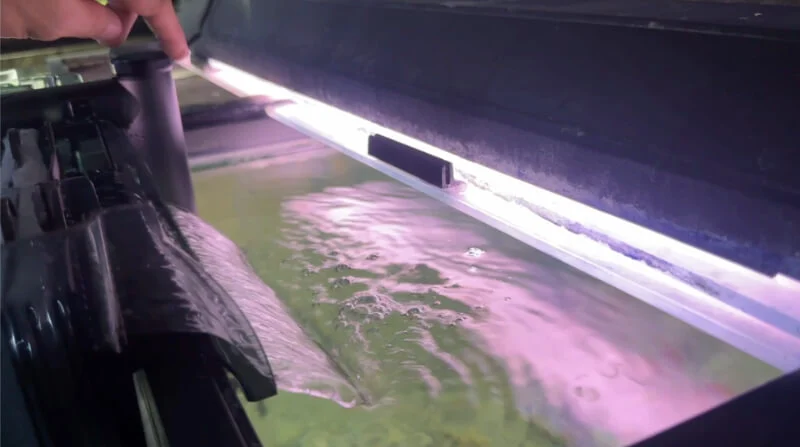
Based on this initial test, yes.
It makes the most sense if you want an accessible HOB filter with adjustable flow, intake protection, and mechanical media that can be inspected quickly.
The 315 GPH model is particularly relevant for moderate-sized aquariums, including many of the builds in our 40-gallon stocking guide.
But we would not buy it solely because the box says 315 GPH.
Flow ratings are only one part of choosing filtration. Media capacity, actual circulation, livestock, maintenance, and the aquarium layout all matter.
For now, the strongest conclusion is simple:
Installation was straightforward, the controls worked as expected, and the filter visibly collected debris within several days.
That’s a promising start.
The long-term verdict still has to be earned.
FAQ’s
Is the hygger 315 GPH filter good for a 40-gallon tank?
The manufacturer rates it for 40–75 gallons, and it worked normally on our 40-gallon test tank. Actual suitability still depends on stocking, media, flow, and maintenance.
Does the hygger 315 GPH filter have adjustable flow?
Yes. The flow-control knob produced a noticeable change in waterfall strength during our test, making it easier to adjust circulation for different fish and setups.
Do you have to prime the hygger HOB filter?
Yes. We filled the filter chamber with aquarium water before startup. Proper priming helps the pump establish circulation and avoids attempting to operate the unit dry.