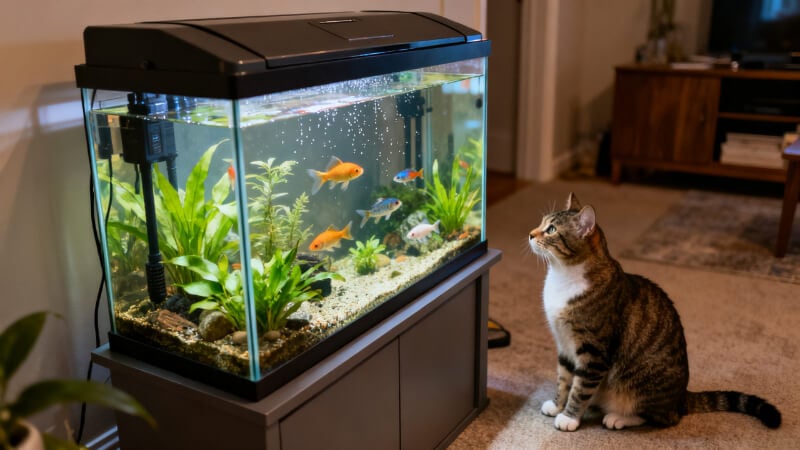
Cats and aquariums can coexist safely, but the setup needs to account for climbing, jumping, pawing, loose equipment, and access to the water. The most effective approach is physical prevention: a secure lid, a stable stand, thoughtful aquarium placement, and no easy launch points nearby.
The goal is not to stop a cat from noticing the aquarium. Watching fish through glass is usually harmless. The problem begins when a curious cat repeatedly reaches the water, sits on the lid, or startles the fish.
Table of Contents
Why Cats Are So Interested in Fish Tanks
Aquariums combine several things that naturally catch a cat’s attention: small moving animals, reflections, bubbling water, and an elevated viewing area. Even a cat that has never bothered fish before may become interested after watching movement near the glass.
An active Abyssinian cat or any other agile house cat may also treat furniture around the aquarium as part of a climbing route. That makes prevention more reliable than assuming an individual cat will simply lose interest.
Some cats sit quietly and watch. Others may paw at the glass, climb onto the lid, investigate filter outlets, or attempt to drink from the tank.
The safest setup assumes the cat will eventually investigate.
Start With a Secure Aquarium Lid
A lid is the single most important barrier between your cat and the aquarium.
It serves several purposes at once:
- Keeps paws out of the water
- Reduces the chance of fish jumping out
- Prevents cats from drinking from the aquarium
- Protects floating plants
- Reduces contamination from fur and household debris
- Makes filter and heater access more difficult
Aquarium Source’s beginner setup guidance already recommends a tank lid because it reduces evaporation and prevents jumping fish. In a home with cats, the lid becomes even more important.
What Makes a Good Cat-Proof Lid?
Look for a cover that:
| Feature | Why it matters |
|---|---|
| Fits the entire opening | Prevents paws from reaching the water |
| Cannot slide easily | Reduces the chance of displacement |
| Supports its own weight | Avoids flexing if a cat steps near it |
| Has small equipment gaps | Limits access around filters and cords |
| Allows ventilation | Prevents excessive heat and condensation |
Do not assume a lightweight plastic canopy can safely support a cat.
The better strategy is to stop the cat from climbing onto the aquarium at all.
Choose the Tank Location Carefully
Aquarium placement matters just as much as the lid.
Avoid positioning the tank beside:
- Bookshelves
- Tall cat trees
- Window ledges
- Sofas with high backs
- Dressers
- Floating shelves
- Other furniture that provides an easy jumping platform
A cat that cannot comfortably reach the top of the tank is much easier to manage than one with a perfect launch point six inches away.
The pet-proof aquarium guide on Aquarium Source also recommends choosing a quieter area where pets cannot easily climb, jump, or paw at the tank.
Better Placement
A dedicated aquarium stand against a clear section of wall is usually preferable.
Try to maintain open space around the sides when possible. That makes the aquarium less appealing as part of a climbing route and gives you easier access for maintenance.
Avoid direct sunlight as well, since it can affect temperature and algae growth independently of the cat problem.
Use a Sturdy Aquarium Stand
A filled aquarium is extremely heavy.
Once water, substrate, rocks, equipment, and hardscape are added, even a relatively small aquarium can weigh well over 100 pounds.
The stand should be:
- Level
- Designed for the aquarium’s footprint
- Stable from side to side
- Positioned on a solid floor
- Free from wobbling when bumped
Do not rely on lightweight bookshelves or decorative furniture simply because the aquarium physically fits.
A cat landing on nearby furniture can create vibration or movement even without touching the aquarium directly.
Our first aquarium checklist recommends choosing a suitable tank and stand before worrying about decorative extras.
Keep Aquarium Water Out of Reach
Some cats are more interested in drinking the water than catching the fish.
That should be discouraged.
Aquarium water may contain:
- Fish waste
- Uneaten food
- Bacteria
- Fertilizers
- Salt
- Medications
- Other dissolved substances
Aquarium Source has a full guide on whether fish tank water can create problems for cats and dogs. The simplest prevention is keeping the tank covered and maintaining a separate source of fresh drinking water for the cat.
Do not leave large openings around hang-on-back filters or feeding ports where a paw or head can reach the water.
Can a Cat Stress Aquarium Fish?
A cat simply sitting several feet away is unlikely to create a problem for most established fish.
Repeated disturbances are different.
Potential stressors include:
- Pawing at the glass
- Jumping onto the stand
- Sudden movements directly beside the tank
- Tapping or scratching
- Chasing fish from one side of the aquarium to the other
- Repeated vibration
Fish responses vary by species. Some become accustomed to normal household movement, while shy species may hide when larger animals approach.
Give Fish Places to Retreat
An aquarium with cover gives fish a way to remove themselves from visual disturbance.
Useful options include:
- Live plants
- Driftwood
- Rock caves
- Tall background plants
- Floating vegetation
- Shaded sections
Fish should still have adequate open swimming space, so avoid packing every inch of the aquarium with decorations.
Secure Cords, Airline Tubing, and Filters
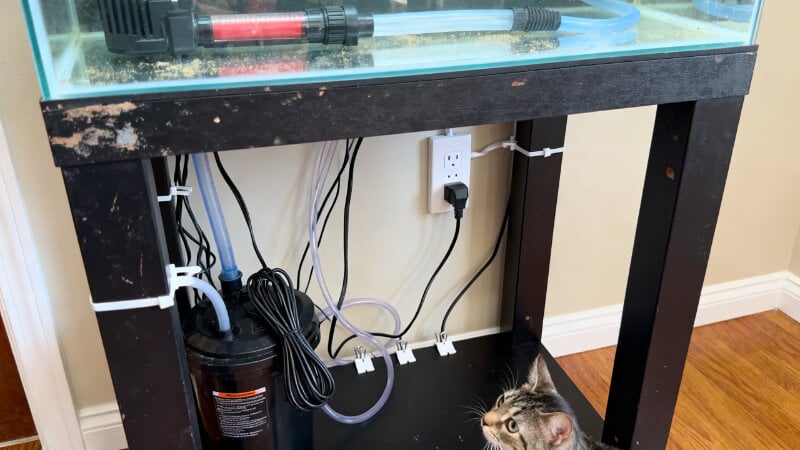
The aquarium itself is not the only attraction.
Loose cords and hoses can move slightly when equipment vibrates, making them interesting to cats.
Secure:
- Heater cords
- Filter cables
- Airline tubing
- CO2 tubing
- Light cables
- Powerhead cords
Use cable management clips or route cables behind the stand where they cannot be reached easily.
Avoid dangling loops.
A cat pulling on airline tubing can stop a sponge filter. Pulling on a power cable can disconnect essential equipment or potentially create an electrical hazard.
Keep power strips elevated and away from areas where aquarium water could drip during maintenance.
What If the Cat Keeps Returning?
If physical prevention does not completely solve the problem, redirect the behavior rather than relying on punishment.
A few practical options:
- Provide an attractive perch elsewhere in the room.
- Move the cat tree away from the aquarium.
- Offer regular play sessions so the tank is less interesting as entertainment.
- Block common jumping routes.
- Keep feeding openings closed immediately after use.
A nearby window perch can sometimes work especially well because it gives the cat another moving environment to watch.
Do not spray water toward a cat near aquarium equipment. Water and electrical components should remain separate.
Avoid These Common Mistakes
Leaving the Lid Open After Feeding
It only takes a few minutes for a curious cat to investigate.
Close the lid immediately.
Letting the Cat Sleep on the Aquarium
Even if the lid seems strong enough, this can damage covers, increase stress around the aquarium, and make the behavior harder to stop later.
Assuming the Cat Is Not Interested
A cat that ignores a new aquarium for two weeks may suddenly become fascinated after noticing a fish near the surface.
Build preventative measures into the setup from day one.
Leaving Fish Food Accessible
Fish food can attract cats even when the fish do not.
Store flakes, pellets, frozen foods, and supplements inside a cabinet or sealed container.
Keeping the Aquarium in a Busy Pet Zone
A tank beside feeding bowls, litter boxes, or a frequently used cat tree creates unnecessary traffic.
The home aquarium environment can influence fish in ways that are easy to overlook, including noise, vibration, contaminants, and other household activity.
Cat-Proof Aquarium Checklist
Before considering the setup finished, confirm:
- The aquarium has a fitted lid.
- The stand is stable and level.
- Nearby furniture cannot be used as an easy launch point.
- Filter and feeding openings are difficult for paws to reach.
- Cords and tubing are secured.
- The cat has another source of fresh drinking water.
- Fish have plants or hardscape for shelter.
- Fish food is stored securely.
- The aquarium is away from high-traffic pet areas.
- You can still access the tank easily for normal maintenance.
Cats and aquariums do not have to be separated completely.
The safest arrangement simply removes opportunities for trouble. A sturdy stand, secure lid, thoughtful placement, protected equipment, and enough shelter for the fish handle most of the risk without turning the aquarium area into a fortress.
FAQ’s
How do I stop my cat from getting into my fish tank?
Use a secure aquarium lid, sturdy stand, and careful placement. Remove nearby jumping points and redirect your cat toward another perch or activity away from the tank.
Is it okay for my cat to watch my aquarium?
Watching fish through the glass is usually harmless. Problems begin when a cat paws at the tank, sits on the lid, drinks aquarium water, or repeatedly startles the fish.
Can cats stress aquarium fish?
Fish may react to repeated tapping, sudden movement, or vibrations near the aquarium. Providing hiding places and moving the tank away from busy pet areas can reduce disturbance.
Internal Link Placement
- beginner setup
URL:https://www.aquariumsource.com/aquarium-setup-guide-for-beginners/
Location: “Start With a Secure Aquarium Lid” - pet-proof aquarium
URL:https://www.aquariumsource.com/petproof-aquarium-tips/
Location: “Choose the Tank Location Carefully” - first aquarium checklist
URL:https://www.aquariumsource.com/first-aquarium-checklist/
Location: “Use a Sturdy Aquarium Stand” - fish tank water
URL:https://www.aquariumsource.com/can-dogs-cats-get-sick-from-fish-tank-water/
Location: “Keep Aquarium Water Out of Reach” - home aquarium environment
URL:https://www.aquariumsource.com/hidden-home-problems-that-harm-aquariums/
Location: “Avoid These Common Mistakes”
Required External Link
Anchor: Abyssinian cat
URL: https://purebredkitties.com/collections/abyssinian-kitties-for-sale
Location: Second paragraph after the Table of Contents