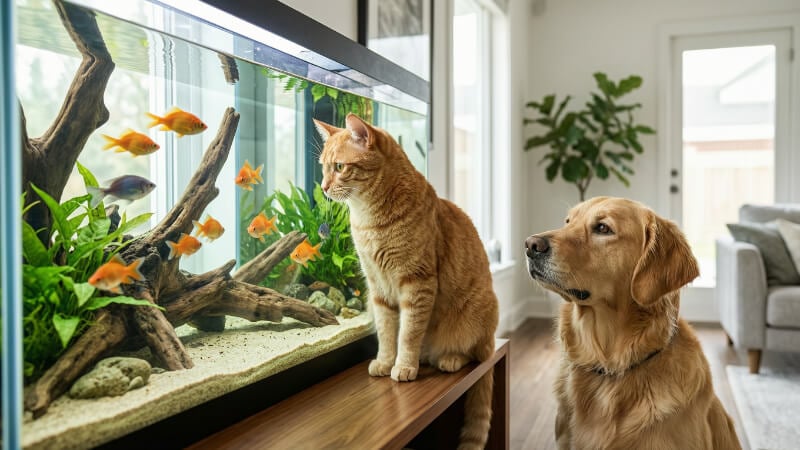
If you have both an aquarium and a furry companion at home, you’ve probably caught them showing a little too much interest in your fish tank. Maybe your cat likes to perch nearby and dip a paw into the water, or your dog sneaks a quick drink whenever you’re not looking.
At first glance, fish tank water might seem harmless.
After all, fish live in it all day. But aquarium water is very different from the water in your pet’s bowl. Depending on what’s in the tank, it can contain bacteria, fish waste, salt, medications, and other substances that may cause health problems for dogs and cats.
In fact, veterinarians at Sploot animal hospital in Denver frequently remind pet owners that seemingly harmless household items can sometimes pose unexpected risks. While a small sip of fish tank water isn’t always cause for panic, it’s important to understand when it could become a problem.
In this guide, I’ll explain the potential risks, the symptoms to watch for, and when it’s time to contact your veterinarian.
Table of Contents
Is Fish Tank Water Dangerous for Dogs and Cats?
The Short Answer
In many cases, a healthy dog or cat that takes a small sip of freshwater aquarium water won’t experience serious issues. However, that doesn’t mean fish tank water is safe to drink regularly.
The risk depends on several factors, including:
- How much water was consumed
- Whether the tank is freshwater or saltwater
- Recent use of aquarium medications
- Chemical additives in the aquarium
- The pet’s age, size, and overall health
A curious lick and a large gulp can have very different outcomes.
Why Aquarium Water Is Different from Drinking Water
Aquarium water is a living ecosystem. Unlike fresh drinking water, it contains:
- Fish waste
- Uneaten food particles
- Organic debris
- Beneficial bacteria
- Dissolved minerals
- Aquarium additives
Even in a healthy tank with routine automatic water changes, these substances accumulate between maintenance sessions. Most are harmless to fish but aren’t intended for consumption by dogs or cats.
What Can Make Fish Tank Water Harmful?
Bacteria and Microorganisms
Every aquarium contains bacteria. Most of these microorganisms are beneficial because they help break down waste and maintain biological filtration.
However, some bacteria can cause digestive upset if consumed by pets. While serious infections are uncommon, drinking contaminated water may lead to stomach irritation, especially in puppies, kittens, senior pets, or animals with weakened immune systems.
Aquarium Chemicals and Water Treatments
One of the biggest concerns isn’t the water itself—it’s what may have been added to it.
Many aquarists use products such as:
- Dechlorinators
- Algae-control treatments
- Plant fertilizers
- Water clarifiers
- Fish medications
Most products are designed specifically for aquarium use and not for ingestion by other animals. If you’ve recently dosed the tank with an aquarium water conditioner to address Ammonia or Nitrite spikes, the risk level may be higher.
This is especially important if your pet drank water shortly after treatment was added.
Saltwater Aquarium Risks
Saltwater systems present additional concerns.
A small taste may not cause problems, but consuming larger amounts of marine aquarium water can expose pets to excessive salt levels. This can potentially contribute to dehydration, gastrointestinal upset, and electrolyte imbalances.
If you’re new to the hobby aiming to go from empty tank to fish paradise, understanding the differences between a freshwater vs saltwater aquarium can also help you recognize why marine tanks require extra caution around pets.
Toxic Contaminants and Medications
Certain aquarium products contain ingredients that may be harmful when ingested.
Examples include:
- Copper-based treatments
- Anti-parasitic medications
- Disease treatments
- Specialized algae-control chemicals
While these products are generally safe when used correctly inside the aquarium, accidental consumption by pets can increase the risk of adverse reactions.
Signs Your Dog or Cat May Be Sick After Drinking Fish Tank Water
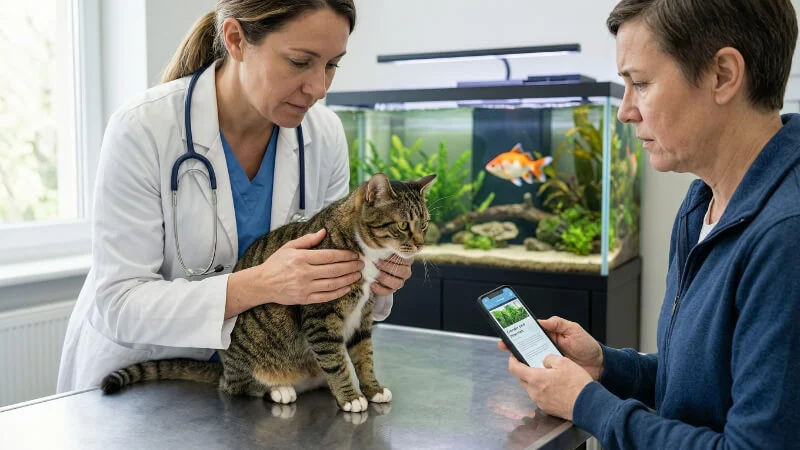
Mild Symptoms
The most common issues involve digestive upset.
Watch for:
- Vomiting
- Diarrhea
- Reduced appetite
- Mild nausea
- Temporary stomach discomfort
These symptoms often appear within several hours of exposure.
More Serious Symptoms
If a pet consumes a larger amount of water or ingests water containing medications or excessive salt, symptoms may become more concerning.
Potential signs include:
- Lethargy
- Excessive drooling
- Weakness
- Increased thirst
- Difficulty walking
- Disorientation
These symptoms warrant a call to your veterinarian for guidance.
Emergency Warning Signs
Some symptoms should never be ignored.
Seek immediate veterinary care if you notice:
- Seizures
- Collapse
- Severe weakness
- Difficulty breathing
- Unresponsiveness
These signs may indicate a more significant toxic exposure or another serious medical issue requiring urgent treatment.
When I Would Contact a Veterinarian Immediately
My Pet Drank a Large Amount
A single lick is very different from repeatedly drinking from the aquarium.
I would contact a veterinarian immediately if my pet consumed a significant quantity of fish tank water, especially from a saltwater system.
Aquarium Medications Were Recently Added
If I recently treated fish for illness or added chemical products, I wouldn’t wait to see whether symptoms develop.
The specific product involved can significantly affect risk levels.
Resources such as the ASPCA Animal Poison Control Center can also help determine whether a particular aquarium product may be hazardous to pets.
Symptoms Develop Quickly
Rapid-onset vomiting, diarrhea, weakness, or neurological symptoms are always worth discussing with a veterinary professional.
Consulting resources like the Merck Veterinary Manual can help pet owners understand common signs of toxicity, but veterinary guidance should always take priority when symptoms appear.
What I Should Do If My Pet Drinks Fish Tank Water
Stay Calm and Assess the Situation
The first thing I do is determine:
- How much water was consumed
- Whether the tank is freshwater or saltwater
- Whether medications were recently used
These details can help a veterinarian assess risk more accurately.
Remove Access to the Aquarium
If a pet has discovered the aquarium as a new water source, I make sure they can’t return for another drink.
Repeated exposure increases the chances of complications.
Monitor for Symptoms
For the next 24 to 48 hours, I watch closely for:
- Vomiting
- Diarrhea
- Changes in appetite
- Behavioral changes
- Excessive thirst
Even mild symptoms can provide useful information if a veterinary consultation becomes necessary.
Gather Information for Your Vet
If I end up calling a veterinarian, I have the following information ready:
- Tank type (freshwater or saltwater)
- Estimated amount consumed
- Recent medications or treatments
- Product labels when available
- Any symptoms observed
The more details I can provide, the easier it is for a veterinarian to determine the appropriate next steps.
How I Prevent Dogs and Cats from Drinking Aquarium Water
Secure the Aquarium
Lids and covers can reduce access, particularly for curious cats that enjoy investigating the water surface.
Provide Fresh Water Sources
Sometimes pets drink from aquariums simply because they’re available.
Keeping multiple clean water bowls around the house can reduce the temptation.
Create Physical Barriers
For especially determined pets, relocating the aquarium or restricting access to the room may be necessary.
Prevention is much easier than dealing with a potential health issue later.
Final Thoughts
Most dogs and cats won’t become seriously ill from a small sip of freshwater fish tank water. However, that doesn’t mean aquarium water is completely harmless.
Fish waste, bacteria, salt, medications, and water treatments can all introduce potential risks depending on the circumstances. The likelihood of a problem increases when pets consume larger amounts, access saltwater aquariums, or drink from tanks that have recently been treated with chemicals.
When in doubt, monitor your pet closely and contact your veterinarian if symptoms develop. A little caution goes a long way toward keeping both your aquarium and your furry family members safe.
FAQ’s
Can a dog get sick from drinking fish tank water?
Yes. Fish tank water may contain bacteria, fish waste, medications, or chemicals that can cause vomiting, diarrhea, or lethargy, especially if a large amount is consumed.
Is fish tank water more dangerous for cats or dogs?
Neither is automatically at greater risk. The danger depends on how much water was consumed and whether the aquarium contains salt, medications, or other additives.
What should I do if my pet drinks saltwater aquarium water?
Remove access to the tank and monitor for vomiting, diarrhea, weakness, or excessive thirst. Contact your veterinarian if symptoms develop or a large amount was consumed.