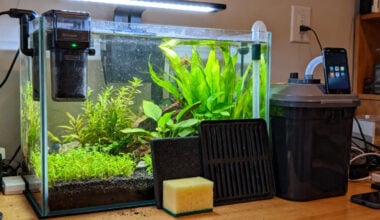
One of the biggest challenges I see new (and even experienced) fishkeepers struggle with is keeping aquarium water clean and healthy. Unlike a river or the ocean, an aquarium is a closed system.
Everything that goes in, uneaten food, fish waste, decaying plant matter, stays there unless we remove or manage it.
When water quality starts to slip, the tank lets you know pretty quickly. Cloudy water, funky smells, algae explosions, or fish acting stressed are all red flags.
I’ve learned that crystal-clear water doesn’t come from one magic product. It comes from a few simple habits working together.
Table of Contents
Getting Your Aquarium Water Sparkling (Without Overthinking It)
Keeping aquarium water clean is really about balance. I think of it like juggling, filtering, feeding, testing, and water changes all need to work together.
If one piece gets ignored, the whole system starts wobbling.
From choosing the right filter to preparing tap water properly, every small step matters. When those steps are dialed in, your tank becomes easier to maintain and far more stable.
And that’s when fishkeeping actually becomes relaxing instead of stressful.
Why I Always Treat Tap Water First
The very first thing I deal with is the water itself. Tap water may be safe for humans, but it often contains chlorine, chloramines, and sometimes heavy metals that are harmful to fish and plants.
On top of that, tap water pH doesn’t always match what aquarium fish need.
That’s why I never skip water conditioner. I use it every single time I add water, whether I’m filling a new tank or doing a routine water change. It neutralizes harmful chemicals and instantly makes tap water safe.
Skipping this step is one of the fastest ways to stress fish, especially after water changes. It’s a small habit that pays off in healthier fish and fewer problems. To learn further, check “Tap Water Safe? How to Prep It for Aquariums Fast“.
Filtration: The Quiet Workhorse of Clean Water
A good filtration system is non-negotiable if you want consistently clean aquarium water. Water changes alone aren’t enough. Fish eat, produce waste, and shed organic material every day. Without filtration, all that breaks down and poisons the water.
There are different types of fish tank filters available, designed to suit different tank sizes, stocking levels and maintenance preferences that usually combine three types of filtration:
- Mechanical filtration traps debris like uneaten food and waste, keeping water visibly clear.
- Chemical filtration removes dissolved impurities that cause odors or discoloration.
- Biological filtration houses beneficial bacteria that convert toxic ammonia and nitrite into safer nitrate (learn more about water chemistry).
Together, these processes stabilize water chemistry and protect fish health around the clock.
Filtration also keeps water moving, which improves oxygen distribution. That benefits both fish and the beneficial bacteria living in your filter media.
When water flows properly, everything in the tank breathes a little easier.
Choosing the Right Filter (And Avoiding Headaches)
Picking the right filter depends on tank size, stocking level, and the type of fish you keep. A lightly stocked tank doesn’t need the same filtration power as a heavily stocked one. When I upgrade tanks or add fish, I always reassess filtration first.
Live plants help too.
They absorb nutrients, stabilize pH, and improve water clarity naturally. Plus, they make tanks look better and give fish places to hide and explore.
In planted tanks, I often notice fewer water quality swings overall.
Water Testing: Catching Problems Before Fish Do
Cloudy water and algae are obvious signs of trouble (see 12 Types of Aquarium Algae), but not all water issues are visible. That’s why regular water testing is one habit I never skip.
I use test strips or liquid kits to monitor pH, ammonia, nitrite. These numbers tell the real story of what’s happening in the tank. If something starts creeping out of range, I can correct it early, before fish show signs of stress.
Testing removes the guesswork. Instead of reacting to problems, I stay one step ahead of them.
Water Changes Without Shocking Your Fish
Water changes are essential which can be done manually or automatic, but doing them too aggressively can actually cause harm. Fish don’t like sudden changes in temperature, chemistry, or mineral content.
I stick to small, consistent water changes rather than big, dramatic ones.
This removes pollutants while keeping conditions stable. The tank adjusts smoothly, and fish stay calm.
How often I change water depends on tank size, stocking level, filtration efficiency, and feeding habits. Regular testing helps me decide when a water change is truly needed instead of following a rigid schedule.
Feeding Less Keeps Water Cleaner (And Fish Healthier)
Overfeeding is one of the fastest ways to ruin water quality. Uneaten food sinks, rots, and fuels ammonia spikes and algae growth. I’ve learned that feeding less almost always solves more problems than feeding more.
My rule is simple:
Only feed what fish can eat in a few minutes, once or twice a day depending on species. Watching how fish eat helps fine-tune portions and prevents waste buildup.
A consistent feeding routine also helps fish digest better and behave more naturally. Clean water starts with controlled feeding, no fancy equipment required.
Clean Water Is About Habits, Not Products
Crystal-clear aquarium water doesn’t come from chasing quick fixes.
It comes from understanding proper water treatments and sticking to simple habits: conditioning water, filtering properly, testing regularly, feeding responsibly, and making gradual adjustments.
When those habits are in place, the tank stays stable, fish stay healthy, and maintenance stops feeling like a constant battle. Clean water isn’t luck, it’s consistency.
And once you experience a truly stable aquarium, you’ll wonder how you ever stressed about cloudy water in the first place.
FAQ’s
Why does my aquarium water turn cloudy so often?
Cloudy aquarium water is usually caused by excess waste, overfeeding, or an uncycled tank. Improving filtration, reducing feeding, and doing small water changes helps restore clarity.
How often should I change aquarium water to keep it clean?
Most aquariums stay clean with 10–25% water changes weekly. Testing ammonia, nitrite, and nitrate levels helps you adjust frequency without stressing fish.
Can overfeeding really ruin aquarium water quality?
Yes. Uneaten food quickly breaks down into ammonia, fueling algae and cloudy water. Feeding only what fish eat in a few minutes keeps water clear and stable.