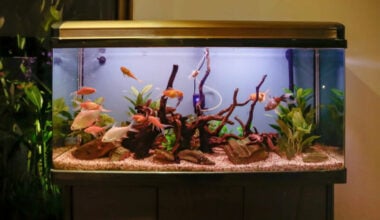
Whether you’re new to fishkeeping or looking to up your aquarium game, this guide will help you get your tank thriving (and have some fun along the way).
Ever notice how we go the extra mile for our dogs and cats? We splurge on premium food, maybe a high-quality dog food for Fido or a nutritious cat food for Whiskers, and some of us even spoil our pups with specialty brands like Acana dog food.
WELL, GUESS WHAT? Taking care of fish isn’t so different at its core. Our scaly friends might not beg at the table, but they still rely on us for the right diet, a clean home, and a little TLC (tender loving care).
So, in the next sections I’m going to walk you through a bunch of tips, from mastering aquarium lighting and water chemistry to nailing the feeding routine and even dabbling in aquascaping. Let’s dive in!
Table of Contents
Lighting: More Than Just Looks
Let’s start with the lights. Aquarium lighting isn’t just about making your tank look good (though a beautifully lit tank is pretty awesome). It actually affects your fish’s behavior, plant growth, and even pesky algae.
For a basic freshwater tank, especially if you have live plants like Java Fern, you’ll want a full-spectrum light that mimics natural daylight (around 6500K color temperature, if you’re into the techy stuff).
Give your plants about 8–10 hours of light a day, and use a simple outlet timer to flip the lights on/off consistently. That way you won’t accidentally leave the lights on all night and wake up to an algae party.
If you’re venturing into saltwater (particularly reef tanks with corals), lighting gets a bit more complex. Corals are basically underwater sunflowers, they need strong, specific light for photosynthesis.
You might hear about T5 fluorescents, high-end LEDs, or metal halide systems in reef circles.
Water Chemistry: Stability Over Perfection
For a freshwater tank:
The main things you’ll check are ammonia, nitrite, nitrate, pH, and maybe general hardness (GH) and carbonate hardness (KH).
For saltwater setups:
Add a few extras to the list: salinity (measured as specific gravity), plus calcium, magnesium, and alkalinity (especially important if you keep corals in a reef tank).
Now, here’s my big tip:
don’t chase perfect numbers.
Your goal is to keep things stable. Fish can adapt to parameters that are a little off ideal, but they won’t handle constant swings very well.
How to Feed Fish Without Overfeeding?
Fish get so excited when food is coming, zooming to the top like tiny sharks. But as much as they’d eat five meals a day if you let them, resist the urge to overfeed.
Overfeeding is the #1 culprit behind yucky water and algae blooms (because all that extra food just decays and pollutes the tank). Some betta owners actually “fast” their fish for a day each week.
Stick to small portions once or twice a day. A good rule of thumb: only feed what your fish can finish in about 2–3 minutes. If food is still raining down to the bottom uneaten after that, you’re giving them too much.
It’s better to underfeed slightly than to overdo it, you can always give another tiny pinch if needed.
Fish Health: Prevention & Quarantine
No one likes to deal with sick fish, and a little prevention goes a long way. One of the best habits you can adopt is to quarantine any new fish (or plants, or snails, or live rock) before adding them to your main tank.
This means setting up a small separate tank for new arrivals and observing them for at least a week or two.
It might sound like extra work, but this simple step can save you a ton of heartache.
Breeding Fish: When Babies Happen
If breeding is your goal, it’s a great idea to set up a separate breeding tank or “love shack” for the prospective parents.
This allows you to:
- Control the environment (and water parameters) to trigger spawning.
and,
- Protect any eggs or fry from being eaten. Yep, many fish will snack on their own eggs or babies if given the chance (rude, I know).
Should you find yourself with a bunch of adorable fry, be prepared for some extra work. Baby fish have tiny mouths and delicate appetites.
For the first week or so, they’ll need special tiny food, we’re talking infusoria (microscopic little critters) or commercially available liquid fry food. After that, they can graduate to slightly bigger bites like baby brine shrimp or finely crushed flakes.
Aquascaping: Decorating Your Fish’s Home
Aquascaping is basically interior decorating for aquariums, and it’s so much fun. It lets you create an underwater world that’s pleasing to your eyes and comfortable for your fish.
A well-decorated tank isn’t just about looks, either. All those plants, rocks, caves, and even quirky ornaments (pirate ship wreck, anyone?) SERVE A PURPOSE.
They give your fish places to hide, explore, and claim as their territory, which in turn reduces stress and makes them feel at home (tetras love to hide when feeling shy).
Think of it like setting up a cozy living room, a couple of comfy hiding spots for the shy guys, some open floor space for the active ones, and a general layout that makes everyone feel secure.
Tech in the Tank: Gadgets & Automation
You’d be amazed at how much tech you can add to your aquarium these days. For instance, automatic fish feeders can take care of mealtimes when you’re on vacation or just super busy (no more worrying if your neighbor remembered to feed your angelfish).

Programmable smart lights can slowly ramp up the brightness in the morning and dim at night to mimic sunrise and sunset. There are also Wi-Fi enabled water monitors that send alerts to your phone if something in the water goes wonky (like pH or temperature swings).
Now, do you need all these fancy gadgets to have a thriving aquarium? Absolutely not. But hey, if you love combining tech with pet care, the aquarium hobby will scratch that itch nicely!
Wrapping Up
That was a lot of info, but I promise it’s all part of an incredibly rewarding journey. Setting up and caring for an aquarium combines a bit of science (hello, nitrogen cycle) with a bit of art (aquascaping and designing your tank), all wrapped up in the joy of watching a tiny ecosystem thrive in your care.
Whether you’re mesmerized by the vibrant colors of a tropical freshwater tank or you’re aiming for the challenge of a saltwater reef, success comes down to starting with a solid foundation: plan your setup, research your fish’s needs, cycle your tank properly, and maintain that water quality.
Now go enjoy your aquarium and give your fish some love (and maybe a tasty snack)! You’ve got this.
FAQ’s
How long should I wait before adding fish to a new tank?
Patience is key! You should wait until your new tank has fully completed its nitrogen cycle, which typically takes about 2–6 weeks.
Can I mix freshwater and saltwater fish in the same tank?
Nope, that’s a definite no-go. Freshwater and saltwater fish come from completely different environments and have very different physiology.
How often should I clean my tank?
Regular maintenance is super important for a thriving aquarium. Aim to do partial water changes of about 20–30% once a week (or at least every other week).