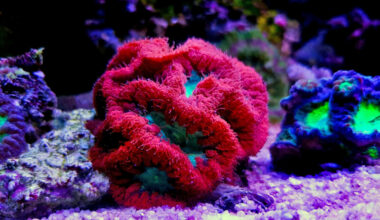
Let me tell you, there’s nothing quite like staring into a thriving reef tank after a long day. It’s like having your own slice of the ocean right in your living room—minus the salt water getting in your eyes and the occasional shark encounter.
Table of Contents
Introduction To Reef Aquariums
A reef tank isn’t just an aquarium with some pretty fish swimming around. It’s a complex ecosystem that mirrors the incredible biodiversity of coral reefs found in our oceans.
We’re talking about creating a living, breathing underwater world where corals, fish, invertebrates, and countless other marine life inhabitants work together in perfect harmony.
Author Note: Well, mostly perfect—there’s always that one hermit crab who thinks he owns the place.
The beauty of reef aquariums lies in their complexity. From the tiniest beneficial bacteria to the most colorful sps corals, every element plays a crucial role in maintaining the delicate balance that makes these systems so mesmerizing to watch.
Planning And Setting Up Your Tank
Before you dive headfirst into the world of reef keeping (see what I did there?), proper planning is absolutely essential. Trust me, I learned this the hard way when I impulse-bought my first tank setup and ended up with what I lovingly called “the expensive saltwater disaster of 2019.”
When I started there weren’t as many coral colonies for sale online and in specialty stores. So hobbyists now have greater access to build breathtaking reef tanks from scratch.
Start by researching the specific needs of the marine life you want to keep. Different corals have vastly different requirements for water flow, lighting, and water parameters.
Some soft corals like leathers are incredibly forgiving for beginners, while sps corals will humble even experienced aquarists faster than you can say “RTN” (rapid tissue necrosis—every reef keeper’s nightmare).
Choosing The Right Location
Here’s something I wish someone had told me early on: location, location, location! Your reef tank’s placement can make or break your entire setup. I once placed my first tank right next to a window because I thought “natural sunlight would be great for the corals.” Spoiler alert: it wasn’t. Hello, algae bloom from hell.
Author Note: Choose a spot away from direct sunlight, heating vents, and high-traffic areas. You want stability—both in terms of temperature and foot traffic. Consider the electrical requirements too.
Reef tanks are power-hungry beasts. Between the lights, pumps, protein skimmer, and various other aquarium equipment, you’ll need multiple outlets.
The floor needs to be level and capable of supporting serious weight. Water weighs about 8.3 pounds per gallon, and that’s before you add live rock, sand, and equipment. A fully loaded 120-gallon reef tank can easily weigh over 1,500 pounds.
Selecting Tank Size And Equipment
Let me share some wisdom that every experienced reef keeper will tell you: bigger is better, and then bigger than that is even better. I started with a 40-gallon tank thinking I was being practical. Six months later, I was shopping for larger tanks because I had caught the coral addiction bug hard.
Author Note: Larger tanks offer several advantages that smaller tanks simply can’t match. The water volume provides much greater stability in water parameters, which is crucial for sensitive marine life.
For beginners, I recommend starting with at least a 75-gallon system, though 120 gallons or more is even better.
Essential equipment includes a reliable protein skimmer—this is your tank’s kidney, removing organic waste before it can decompose. Don’t cheap out here; a quality skimmer will save you countless headaches. You’ll also need a robust filtration system, proper lighting (LED fixtures are the way to go), and powerheads for water flow.
Different species have different flow preferences—some sps corals love strong, chaotic flow, while certain soft corals prefer gentler currents. Plan for multiple powerheads and consider a wavemaker to create natural flow patterns.
Understanding Water Parameters And Filtration
Welcome to the chemistry class you probably didn’t expect! Water parameters are the foundation of reef keeping, and maintaining stability is more important than hitting perfect numbers. I’ve seen tanks thrive with “imperfect” parameters that remained stable, while others crashed due to constant adjustments and sudden changes.
The key parameters you’ll need to monitor include:
- Salinity (specific gravity around 1.025)
- Ph levels (8.1-8.4)
- Temperature (76-82°F)
- Alkalinity (8-12 dKH)
- Calcium (400-450 ppm)
- Magnesium (1250-1350 ppm).
The nitrogen cycle is particularly important—ammonia and nitrite levels should be zero, while nitrates should be kept low (under 20 ppm). High phosphates can fuel algae growth, so keeping those in check is essential.
Your filtration system needs to handle both mechanical and biological filtration (check our Best Canister Filters). Live rock serves as excellent biological filtration, housing beneficial bacteria that break down waste products.
A quality protein skimmer removes organic compounds before they can decompose, while regular water changes help maintain water quality and replenish trace elements. To save you time googling around we summarized Best Protein Skimmers For Your Aquarium.
Fish And Coral Selection
Now we’re getting to the fun part—choosing your tank’s inhabitants! This is where your reef tank really comes to life, but it’s also where many people make costly mistakes.
I’ll admit, I’ve been guilty of falling in love with a fish at the store only to discover later that it considers corals a delicacy.
Choosing Compatible Fish And Invertebrates
Creating a harmonious community tank requires understanding the behavior and needs of each species. Some fish are model citizens, while others are the neighborhood bullies or notorious coral munchers.
Great reef-safe fish include clownfish, cardinals, wrasses, gobies, and most tangs (check our 10 Most Popular Tangs). These species generally leave corals alone and add personality to your tank. Invertebrates like cleaner shrimp (fire shrimp is one of them), snails, and hermit crabs serve important roles in your ecosystem. Cleaner shrimp not only look cool but actually help maintain fish health by removing parasites.
Avoid fish known to nip at corals, such as most angelfish, some butterflyfish, and pufferfish. These beautiful fish belong in fish-only systems where they can’t turn your expensive coral collection into an all-you-can-eat buffet.
Understanding Coral Requirements And Care
Corals are the stars of any reef tank, but they’re also the most demanding residents. Each type has specific needs for lighting, water flow, and water chemistry. Getting this right is what separates a thriving reef from an expensive collection of bleached skeletons.
Start with hardy species like:
- Zoanthids
- Green star polyps
- Leather corals.
These are incredibly forgiving and can handle the inevitable beginner mistakes. Zoanthids, in particular, are practically indestructible and come in amazing colors.

Soft corals, including leathers and xenia, are generally easier to care for than their hard coral cousins. They’re more tolerant of fluctuating water parameters and don’t require the precise calcium and alkalinity levels that sps corals demand.
Author Note: Xenia is infamous for its ability to grow rapidly—sometimes too rapidly.
As you gain experience, you might want to try lps corals like hammer and torch corals. These are absolutely stunning when extended and flowing in the current, but they require more stable conditions and proper spacing to prevent coral warfare (yes, corals can be aggressive neighbors).
For the truly ambitious, sps corals represent the pinnacle of reef keeping. These small polyp stony corals are incredibly beautiful but demand pristine water conditions, intense lighting, and strong water flow.
Maintenance And Upkeep
Here’s the reality check: reef tanks require regular maintenance. There’s no “set it and forget it” in reef keeping.
But don’t worry, once you establish a routine, it becomes second nature—like brushing your teeth, but with more salt water and the occasional curse word when you accidentally knock over a coral.
Consistency is key. I recommend establishing a weekly schedule for testing, cleaning, and maintenance tasks. This prevents small problems from becoming major disasters.
Water Changes And Testing
Regular water changes are the backbone of reef tank maintenance. They remove accumulated waste products, replenish trace elements, and help maintain stable water parameters. I typically change 10-20% of my water weekly, though some successful reef keepers do larger changes less frequently.
Testing should be done regularly, especially for the critical parameters. I test alkalinity and calcium twice a week, pH and salinity weekly, and nitrates every other week. During the initial setup or after any major changes, test more frequently. Remember, knowledge is power, and in reef keeping, ignorance can be expensive.
Author Note: Invest in quality test kits—the cheap ones might save you a few bucks upfront, but inaccurate readings can cost you much more in lost livestock. Check our 8 Best Aquarium Water Test Kits.
Feeding And Cleaning
Feeding in a reef tank is a delicate balance. Overfeeding leads to poor water quality and algae growth, while underfeeding can result in malnourished fish and corals. Most reef fish should be fed small amounts multiple times a day rather than one large feeding.
Corals have varying nutritional needs. Some, like zoanthids and soft corals, get most of their nutrition from the zooxanthellae algae living in their tissues. Others, particularly lps corals, benefit from targeted feeding with coral foods.
How about the cleaning? It involves removing algae from glass, maintaining equipment, and keeping the sand bed clean. I use a magnetic algae scraper daily and clean the protein skimmer cup weekly to prevent overflow and maintain its efficiency.
Troubleshooting Common Issues
Even the most experienced reef keepers face challenges. The key is early detection and quick, appropriate response.
Most problems in reef tanks develop slowly, then seem to explode overnight. KEEP AN EYE! Regular observation of your tank’s inhabitants and water parameters helps catch issues before they become disasters.
Algae Growth And Control
Algae growth is probably the most common issue reef keepers face. A little algae is normal and even beneficial, but excessive growth can quickly turn your beautiful reef into an unsightly mess. I’ve battled everything from green hair algae to stubborn red slime algae, and each type requires a different approach.
Author Note: The root cause of most algae problems is excess nutrients—usually nitrates and phosphates. These can come from overfeeding, infrequent water changes, or inadequate filtration. Regular testing helps identify nutrient levels before they become problematic.
How to prevent? Maintain good water quality through regular water changes, don’t overfeed, and ensure your protein skimmer is working efficiently. A well-functioning skimmer removes organic waste before it can decompose and fuel algae growth.
What if algae is already there? Identify the type first. Green hair algae often indicates high nitrates, while red slime algae (actually cyanobacteria) suggests poor water flow and low oxygen levels. Different algae types require different solutions—manual removal, water parameter adjustments, or biological controls like algae-eating fish and invertebrates.
Enjoy the journey! The most important thing to remember is that reef keeping is a journey, not a destination. Every tank is different, every coral has its own personality, and every reef keeper develops their own style and methods.
Take your time, be patient, and enjoy the process. Your reef tank will evolve and mature over time, becoming more beautiful and stable with age.
In closing: Remember, you’re not just keeping fish and corals—you’re maintaining a living piece of the ocean. With proper planning, dedication, and a little bit of luck, you’ll create a stunning reef tank that brings the beauty and wonder of coral reefs right into your home.
And who knows? You might just catch the reef keeping bug as hard as I did. Don’t say I didn’t warn you!
FAQ’s
What are the best beginner corals for a new reef tank?
The best beginner corals include zoanthids, green star polyps, and leather corals. These soft corals are incredibly hardy and forgiving of water parameter fluctuations. Zoanthids come in amazing colors and are practically indestructible, while leather corals like xenia grow quickly and tolerate varying conditions. Avoid sps corals initially—they require pristine water quality and stable parameters that beginners often struggle to maintain.
How often should I do water changes in my reef aquarium?
Perform regular water changes of 10-20% weekly for optimal reef tank health. This removes accumulated nitrates and phosphates while replenishing essential trace elements like calcium and magnesium. Consistent weekly water changes prevent algae growth and maintain stable water parameters better than larger, less frequent changes. Never skip water changes—your corals depend on this routine maintenance for long-term health.
What water parameters are most important for coral growth?
The most critical water parameters for coral growth are alkalinity (8-12 dKH), calcium (400-450 ppm), magnesium (1250-1350 ppm), and stable pH levels (8.1-8.4). Keep ammonia and nitrite at zero, with nitrates under 10 ppm. Maintain salinity around 1.025 specific gravity. Regular testing and stability are more important than perfect numbers—sudden changes in water chemistry can stress or kill corals faster than slightly imperfect parameters.