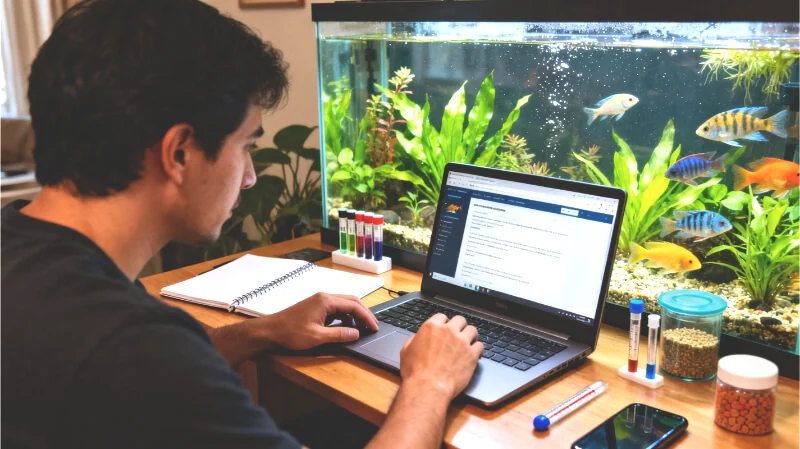
Fishkeeping advice is everywhere. Search almost any aquarium question and you’ll find care guides, videos, Reddit threads, product pages, forums, and social media comments offering an answer.
The problem is that those answers often disagree.
One source says a fish needs a 10-gallon tank. Another says 20. One recommends a certain temperature range while another gives completely different numbers. And advice that works in one aquarium may be a poor fit for another.
Learning how to judge aquarium advice is therefore almost as important as finding the advice itself.
Table of Contents
Start With the Exact Species
Broad statements such as “tropical fish like warm water” are rarely enough to make a good husbandry decision.
Different species can have very different requirements for:
- Adult size
- Temperature
- Water chemistry
- Diet
- Group size
- Swimming space
- Temperament
- Compatibility
Even fish that look similar may need very different conditions.
This becomes especially important with broad store labels such as plecos, corydoras, loaches, and freshwater sharks.
Before acting on a recommendation, make sure it actually applies to the species you’re keeping.
Our community fish guide is a good example of why this matters. Even peaceful species that can share a community aquarium still differ significantly in adult size, minimum tank dimensions, behavior, and water requirements.
Be Careful With One-Size-Fits-All Rules
Fishkeeping has accumulated plenty of simple rules over the years.
Some are useful as rough starting points.
Problems begin when they’re treated as universal.
Examples include:
- One inch of fish per gallon
- Change exactly 25% of the water every week
- Replace filter cartridges every month
- Certain fish will “clean the tank”
- A specific gallon number works for every fish of a certain size
Real aquariums have too many variables for most decisions to be reduced to one number.
A lightly stocked planted aquarium can behave very differently from a heavily stocked tank of the same volume.
Good advice explains why a recommendation exists and when it may need to change.
Look for Explanations, Not Just Instructions
Compare these two statements:
“Keep corydoras in groups.”
and:
“Corydoras are social fish, so keeping an appropriate group allows more natural social and foraging behavior.”
The second is much more useful.
It tells you why the recommendation matters.
Strong aquarium resources should explain the reasoning behind:
- School size
- Tank dimensions
- Temperature
- Filtration
- Water changes
- Feeding
- Hiding places
- Tank mates
Understanding the reasoning makes it easier to apply advice to your aquarium rather than blindly copying somebody else’s setup.
Check Adult Size, Not Store Size
Most pet stores sell juvenile fish.
That makes adult size one of the easiest things for new fishkeepers to underestimate.
A fish that is two inches today may eventually become:
- Four inches
- Eight inches
- A foot long
- Or considerably larger
Before buying a fish, check:
- Adult size
- Growth rate
- Social requirements
- Swimming-space needs
- Whether your aquarium will still be appropriate when the fish matures
Planning around the juvenile you see today instead of the adult it will become is one of the most common ways stocking plans go wrong.
Cross-Check Important Claims
You don’t need ten sources for every aquarium decision.
But anything that can significantly affect fish health deserves a second look.
Cross-check information about:
- Adult size
- Temperature
- Water chemistry
- Compatibility
- Group size
- Medications
- Unusual symptoms
Cycling is a good example.
Our nitrogen cycle guide explains why ammonia and nitrite must be controlled before fish are added and why testing matters throughout the process.
When another resource gives completely different cycling advice, understanding the actual biological process makes it easier to judge which recommendation makes sense.
Good articles also point readers toward deeper resources when another topic needs more explanation.
On the publishing side, these relevant in-content references are sometimes called contextual backlinks.
For the fishkeeper, though, the terminology doesn’t matter much.
What matters is whether the link actually helps answer the next question.
A cycling article linking to ammonia testing makes sense.
A completely unrelated link does not.
Separate Experience From Evidence
Personal aquarium experience can be extremely useful.
Problems begin when one successful setup is presented as proof that a practice works everywhere.
For example:
“My betta lives with these fish” does not prove that pairing is reliably compatible.
“My fish survived at this temperature” does not make the temperature ideal.
“I never change my aquarium water” does not mean every aquarium can operate that way.
Useful personal experience includes context:
- Tank size
- Stocking
- Water parameters
- Filtration
- Duration
- Feeding
- Plant mass
- What was actually measured
The more unusual the recommendation, the more important that context becomes.
Don’t Confuse Survival With Good Care
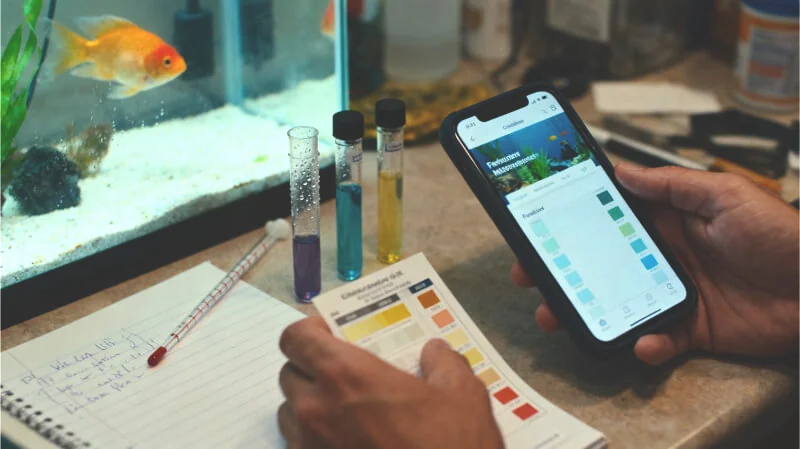
One of the weakest arguments in fishkeeping is:
“My fish lived for years, so the setup was fine.”
Survival alone tells us little about whether the fish had appropriate conditions.
A better question is whether the fish can:
- Grow normally
- Display natural behavior
- Eat properly
- Rest normally
- Interact with its own species when needed
- Swim without constant restriction
- Avoid chronic aggression or stress
- Maintain good long-term health
For example, our betta care guide does more than give a gallon number. It also covers temperature, filtration, water quality, plant cover, flow, feeding, and behavior because all of those affect long-term welfare.
The goal isn’t simply keeping a fish alive.
It’s creating an environment suited to the animal.
Be Especially Careful With Health Advice
Fish health information deserves more scrutiny than almost anything else.
Symptoms such as:
- Lethargy
- Loss of appetite
- Clamped fins
- Color changes
- Bottom sitting
- Rapid breathing
can have many possible causes.
Seeing one symptom does not automatically identify a disease.
Water quality and temperature should often be checked before medication enters the conversation.
Even something as basic as preparing a tank correctly matters. Our first aquarium setup guide emphasizes conditioned water, testing, filtration, and equipment setup before fish are added.
Treating the wrong condition can add stress without fixing the actual problem.
When a fish is seriously ill or the cause remains unclear, an aquatic veterinarian is more appropriate than diagnosing from one social media comment.
Look for Sources That Admit Limitations
Good aquarium advice does not need to pretend every question has one perfect answer.
In fact, phrases like these can be signs of responsible guidance:
- “This depends on the species.”
- “Use this as a starting point.”
- “Monitor your water parameters.”
- “Individual temperament varies.”
- “There are several acceptable approaches.”
- “This setup may not work for every fish.”
Fishkeeping involves living animals and biological systems.
Some uncertainty is unavoidable.
A source that acknowledges those limitations can be more useful than one promising a universal formula.
Watch Out for Advice Designed Mainly to Sell Something
A product recommendation is not automatically bad.
Filters, heaters, medications, food, lighting, and test kits are all legitimate parts of aquarium keeping.
But ask whether the recommendation makes sense before the product enters the conversation.
Warning signs include:
- Every problem leads to the same product
- No cheaper alternatives are mentioned
- The page never explains why the product is needed
- Important limitations are missing
- The article treats buying equipment as a substitute for understanding the problem
The product should support the solution.
It should not be the solution simply because somebody earns money when you buy it.
Reevaluate Advice as Your Aquarium Changes
An aquarium isn’t static.
Fish grow.
Plants spread.
Filters accumulate debris.
Territories change.
Water chemistry can shift.
A stocking plan that worked when every fish was juvenile may need to be reconsidered a year later.
That means good fishkeeping is less about finding one perfect guide and following it forever.
It is about understanding enough to recognize when something has changed.
The best aquarium information helps you do exactly that:
understand the fish, understand the system, and make informed adjustments instead of blindly following rules.
A Simple Reliability Checklist
Before following aquarium advice, ask:
| Question | Good sign |
|---|---|
| Is the exact species identified? | Yes |
| Does it explain why? | Yes |
| Does it consider adult size? | Yes |
| Are limitations mentioned? | Yes |
| Can important claims be checked elsewhere? | Yes |
| Does it distinguish observation from fact? | Yes |
| Is animal welfare prioritized over convenience? | Yes |
If several of those answers are no, keep researching.
Frequently Asked Questions
How do I know if aquarium advice online is reliable?
Look for species-specific guidance, explanations for recommendations, adult-size information, realistic limitations, and claims that can be confirmed through other trustworthy sources.
Should I trust advice from aquarium forums and Reddit?
Forums can provide useful experience, but one person’s tank is not universal evidence. Use community advice as a lead, then verify important husbandry or health claims elsewhere.
Why do aquarium care guides sometimes disagree?
Tank conditions, species, source water, filtration, behavior, and husbandry goals can differ. Good sources explain those variables instead of pretending one answer fits every aquarium.


