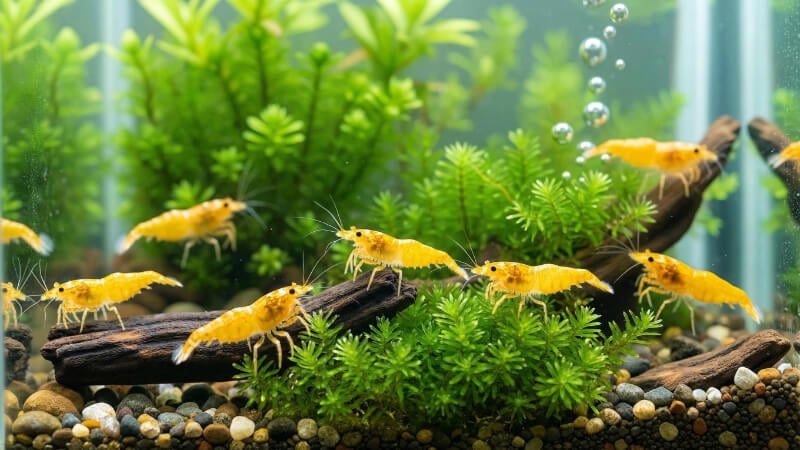
Yellow shrimp are one of those aquarium critters that make a tank feel instantly more alive. They’re tiny, bright, busy, and weirdly fun to watch as they graze around like little underwater lawn mowers.
Most yellow shrimp sold in the hobby are yellow Neocaridina shrimp, usually a color variety of Neocaridina davidi. They’re close relatives of cherry shrimp, which is good news because their care is very beginner-friendly compared to fussier shrimp species.
That said, “easy” doesn’t mean “bulletproof.” Yellow shrimp are still sensitive to poor water quality, unstable parameters, and copper-based medications. But with a stable tank and the right setup, they can thrive, breed, and turn into a cheerful little colony.
Table of Contents
Species Overview
Yellow shrimp are freshwater dwarf shrimp known for their bright lemon-yellow to golden coloration. Some are pale yellow, while higher-grade lines can look almost neon under good lighting.
They’re peaceful, active, and spend most of their time grazing on biofilm, algae, leftover food, and tiny organic bits around the aquarium. Basically, they are the cleanup crew members that also happen to look adorable.
Here’s the quick snapshot:
| Scientific name: | Neocaridina davidi var. yellow |
| Common names: | Yellow shrimp, yellow cherry shrimp, yellow Neocaridina shrimp |
| Adult size: | Around 1 to 1.5 inches |
| Temperament: | Very peaceful |
| Lifespan: | About 1 to 2 years |
| Diet: | Omnivore and biofilm grazer |
| Minimum tank size: | 5 gallons |
| Care level: | Beginner-friendly |
| Breeding: | Easy in freshwater |
Author Note: Because yellow shrimp are a color strain of Neocaridina, their care is very similar to cherry shrimp care. So if you’ve kept red cherry shrimp before, you’re already halfway there.
Appearance
The main appeal here is obvious: that bright yellow color.
Yellow shrimp can range from soft translucent yellow to deep golden yellow. Females are usually larger and more intensely colored than males, especially once mature. Males tend to be smaller, slimmer, and sometimes a bit more transparent.
Healthy yellow shrimp should look active, clean, and alert.
Their color may look dull after shipping, during stress, or right before molting. Don’t panic if a new shrimp looks a little washed out at first. Give it stable water, good food, and some time to settle in.
One thing to know: yellow shrimp can lose color quality over generations if you don’t selectively cull or separate weaker-colored individuals. That doesn’t mean the shrimp are unhealthy. It just means genetics are doing genetics.
Yellow Shrimp Tank Size
A 5-gallon tank is a good minimum for yellow shrimp, but a 10-gallon tank is much easier to keep stable.
Shrimp don’t need tons of swimming space, but they do need consistent water quality. Smaller tanks can swing quickly in temperature, pH, and water chemistry, which shrimp do not appreciate. They are tiny animals, but they are dramatic about instability. Fair enough, honestly.
A 10-gallon shrimp-only tank is a great setup because it gives you room for plants, hardscape, and a growing colony.
It also gives baby shrimp more places to hide.
For more setup ideas, this is a great internal linking opportunity to point readers toward an Aquarium Source guide on how to set up a freshwater aquarium or best 10-gallon fish tank ideas.
Water Parameters
Yellow shrimp are hardy by shrimp standards, but they still need stable parameters.
Aim for:
– Temperature: 68°F to 78°F
– pH: 6.8 to 8.0
– GH: 6 to 10 dGH
– KH: 3 to 8 dKH
– Ammonia: 0 ppm
– Nitrite: 0 ppm
– Nitrate: Ideally below 20 ppm
The most important word here is stable. A yellow shrimp kept at a steady pH of 7.6 will usually do better than one bouncing between 6.8 and 7.8 every week.
Author Note: Make sure the tank is fully cycled before adding shrimp. They are very sensitive to ammonia and nitrite, and even small spikes can cause losses.
A liquid test kit is one of the best tools you can own if you’re serious about shrimp. Test strips are convenient, but they can be vague, especially when you’re trying to understand GH and KH.
Internal link opportunity: link to Aquarium Source posts on aquarium cycling, freshwater aquarium water parameters, and how to lower nitrates in a fish tank.
Tank Setup
Yellow shrimp love a planted tank. Plants provide cover, grazing surfaces, and a steady supply of biofilm. Plus, shrimp crawling through moss is peak aquarium cuteness.
Great plants for yellow shrimp include:
- Java moss
- Christmas moss
- Java fern
- Anubias (check our Best Plants for Aquariums in Small Dorm Rooms)
- Hornwort
- Water sprite
- Floating plants (we have a guide about the 13 Best Floating Aquarium Plants)
Moss is especially useful because baby shrimp can hide in it and graze on microscopic food. If you want a breeding colony, moss is your friend.
For filtration, a sponge filter is usually the best choice. It provides gentle flow, won’t suck up baby shrimp, and grows tons of beneficial bacteria and biofilm. Hang-on-back filters can work too, but you’ll need a sponge pre-filter over the intake.
Substrate can be simple.
Inert gravel or sand works well for Neocaridina shrimp. You don’t need an active buffering substrate unless your tap water is unusual or you’re keeping more delicate shrimp species.
Author Note: Decor like driftwood, rocks, botanicals, and cholla wood are also helpful. They create surfaces for biofilm to grow and give shrimp more places to explore.
Food And Diet
Yellow shrimp spend all day grazing, but you still need to feed them.
Their natural diet includes biofilm, algae, decaying plant matter, tiny microorganisms, and leftover food. In the aquarium, you can offer:
- Shrimp pellets or wafers
- Algae wafers
- Blanched zucchini
- Blanched spinach
- Cucumber slices
- High-quality fish flakes in tiny amounts
- Mineral supplements made for shrimp
The trick is not overfeeding. A shrimp colony needs far less food than most beginners think. Start with a tiny amount that they can finish within a couple of hours. Remove uneaten vegetables before they foul the water.
Overfeeding is one of the easiest ways to crash a shrimp tank. The food rots, ammonia rises, bacteria bloom, and suddenly the shrimp are staging a tiny yellow protest.
For small colonies, feed every other day or a few times per week. In mature planted tanks, they’ll find plenty of snacks between meals.
Internal link opportunity: link to posts on what do shrimp eat, best algae eaters, or feeding freshwater aquarium fish.
Tank Mates
Yellow shrimp are peaceful and defenseless, which means tank mate choice matters a lot.
The safest option is a shrimp-only tank. This gives adults and babies the best survival rate.
Good potential tank mates include:
Some small fish may work, but there’s always a risk. Even “peaceful” fish may eat baby shrimp. If it fits in the mouth, it is probably food. That’s the sacred law of aquariums.
Possible fish tank mates include small rasboras, ember tetras, and other tiny community fish, but expect fewer baby shrimp to survive.
Author Note: Avoid larger or aggressive fish such as bettas, cichlids, goldfish, gouramis, angelfish, and most barbs. Some individual bettas may ignore shrimp, but others will treat them like expensive popcorn.
Internal link opportunity: link to best shrimp tank mates, betta fish tank mates, and community fish stocking guides.
Molting
Like all shrimp, yellow shrimp molt as they grow. They shed their old exoskeleton and emerge with a new soft shell that hardens over time.
A successful molt depends on good minerals, stable water, and low stress. If your shrimp are having failed molts, check GH, KH, diet, and water change habits.
You may see empty white shells in the tank.
Leave them in there! Shrimp often eat their old molts to recycle minerals. Gross? Maybe. Efficient? Absolutely.
Avoid sudden large water changes unless necessary. Big parameter swings can trigger stress molts, which are risky.
Breeding Yellow Shrimp
Yellow shrimp are easy to breed in freshwater. You don’t need brackish water, special larval food, or complicated equipment.
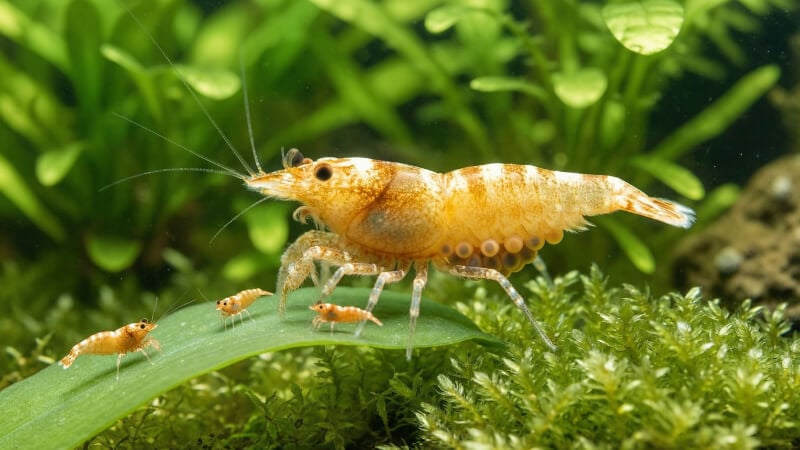
When females mature, you may notice a yellowish “saddle” behind the head, which is a cluster of developing eggs. After mating, the female carries eggs under her swimmerets until they hatch into tiny shrimplets.
Baby yellow shrimp look like miniature adults. They hide, graze, and grow without much help from you.
To encourage breeding:
- Keep water stable
- Use a sponge filter
- Add moss and plants
- Avoid predators
- Feed lightly but consistently
- Keep nitrates low
Once the colony gets going, population growth can be surprisingly fast. Thankfully, shrimp have a light bioload, so a healthy planted tank can support a nice colony.
Author Note: Just avoid mixing yellow shrimp with other Neocaridina color morphs, such as red cherry shrimp, blue dream shrimp, or orange shrimp, unless you don’t care about color. They can interbreed, and the offspring often revert to wild-type brown or clear coloration over time.
Common Health Problems
Yellow shrimp don’t usually get “sick” in the same obvious way fish do, but they can struggle when conditions are off.
Common problems include:
- Failed molts: Often linked to mineral imbalance, poor diet, or unstable water.
- Sudden deaths: Usually caused by ammonia, nitrite, copper, pesticides, or big parameter swings.
- Lethargy: Can point to poor water quality, low oxygen, or toxins.
- Color loss: Often caused by stress, poor genetics, or recent shipping.
Copper is a big one. Many fish medications contain copper, and copper can be deadly to shrimp. Always check labels before treating a shrimp tank.
Also be careful with plants. Some aquarium plants are treated with pesticides before sale. Quarantine or rinse new plants carefully before adding them to a shrimp tank.
Are Yellow Shrimp Good For Beginners?
Yes, yellow shrimp are great for beginners who are willing to keep the tank stable.
They’re hardy, peaceful, colorful, and easy to breed.
They also help clean up small bits of algae and leftover food, although they should not be treated as a replacement for regular maintenance.
The best beginner setup is a cycled 10-gallon planted tank with a sponge filter, inert substrate, and no fish predators. Keep the water clean, avoid overfeeding, and let biofilm build up naturally.
Do that, and your yellow shrimp should reward you with constant activity and, eventually, lots of tiny yellow babies.
Final Thoughts
Yellow shrimp are one of my favorite choices for anyone who wants a colorful, low-maintenance freshwater invertebrate. They’re small, peaceful, and surprisingly entertaining once you slow down and watch what they’re doing.
Give them a mature tank, stable water, gentle filtration, and plenty of plants, and they’ll settle in beautifully. Before long, you might go from “I bought ten shrimp” to “Why is every leaf moving?” And honestly, that’s the dream.
FAQ’s
Are yellow shrimp easy to care for?
Yes, yellow shrimp are easy to care for as long as their tank is fully cycled and water parameters stay stable. They do best in peaceful planted tanks with gentle filtration, clean water, and no aggressive fish.
How many yellow shrimp should I start with?
I recommend starting with at least 10 yellow shrimp. This gives you a better chance of having both males and females, helps them feel more active, and makes it easier to establish a breeding colony.
Can yellow shrimp live with fish?
Yellow shrimp can live with some small peaceful fish, but a shrimp-only tank is safest. Even tiny community fish may eat baby shrimp, so expect fewer shrimplets to survive in a mixed aquarium.