Last updated on September 2nd, 2026 at 06:30 pm
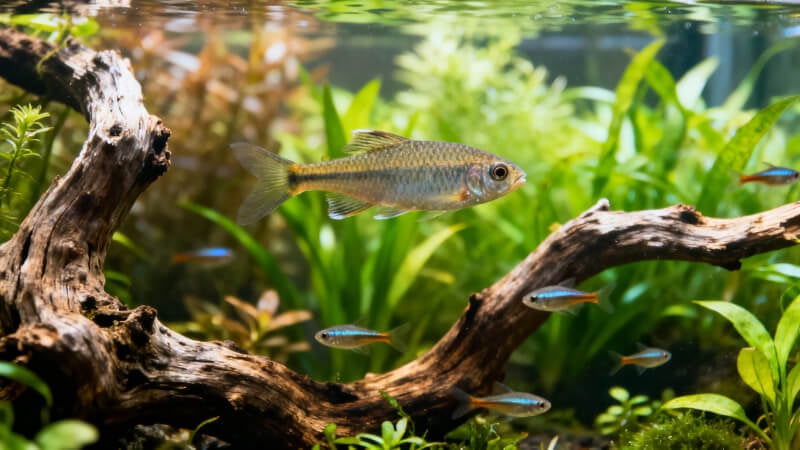
Breeding aquarium fish can be one of the most rewarding parts of fishkeeping. Watching eggs hatch, seeing tiny fry appear, or noticing a shrimp colony grow can make a tank feel alive in a whole new way. But successful breeding also brings responsibility.
A few extra fish may seem harmless at first, but a tank can become crowded much faster than beginners expect.
Responsible breeding is not just about whether fish can reproduce. It is about whether you can safely care for the young after they arrive. That means thinking ahead about space, filtration, water quality, food, separation, and rehoming.
Larger aquariums tend to provide more stable water conditions, and fishkeepers also need to consider how large young fish will become as adults, not just how small they are when born or hatched.
Table of Contents
Start with the question: Should these fish breed?
Before encouraging breeding, ask a practical question: Do you have a plan for the offspring?
Many beginner-friendly fish, including guppies, mollies, platies, swordtails, cichlids, and some shrimp, can reproduce readily in home aquariums. That sounds exciting until the tank has more juveniles than it can comfortably support. Fish not only need enough water to swim in, but they also need enough oxygen, clean water, territory, hiding places, and low stress.
Merck Veterinary Manual notes that the carrying capacity of an aquarium depends on filtration capacity and available territory, and that crowding can cause stress and illness, especially in sensitive systems.
That is why responsible breeders plan before the fry arrive, not after the tank is already crowded.
A simple rule is this: if you cannot house, separate, or rehome the young, do not intentionally breed the fish yet.
Know the species before you plan the population
Different aquatic pets create very different breeding challenges.
Livebearers such as guppies and mollies like the Ballon Molly may give birth to free-swimming fry, which can quickly hide among plants and decorations. Egg-laying fish may produce eggs that need protection from parents or tank mates.
Some cichlids guard their young, while others may become territorial. Shrimp colonies can grow steadily if the water is stable and predators are absent. Snails can multiply quickly if food is abundant.
Do not rely on a general “one rule fits all” approach.
A species that looks small in a store may grow larger, need more territory, or produce more young than expected. RSPCA guidance specifically warns fishkeepers to consider adult size because some fish sold for aquariums can become unsuitable for ordinary home tanks.
Before breeding, write down:
- adult size of the species;
- expected behavior during breeding;
- whether parents protect or eat eggs and fry;
- whether fry need a nursery tank;
- how fast juveniles grow;
- when males and females may need to be separated;
- where extra juveniles will go.
This is not overthinking. It is basic welfare planning.
Think in possible outcomes, not exact numbers
No fishkeeper can predict a breeding result perfectly. Some eggs may not hatch. Some fry may be eaten or fail to thrive. Some broods may be small, while others may be unexpectedly large. Even sex ratios and visible traits can vary from one batch to another.
This is where planning in ranges is more useful than guessing one number. For example, instead of asking, “How many fry will I get?” ask:
- What is the lower number I should be ready for?
- What is the higher number I should be ready for?
- What happens if more fry survive than I expected?
- Can my tank handle that outcome for several weeks or months?
For simple “what could happen?” scenarios, calculating probability for possible breeding outcomes can help you think through survival chances, sex ratios, or trait appearance before the tank starts filling up.
The goal is not to turn fishkeeping into a math exercise. It is to avoid being surprised by a population increase you are not ready to manage.
Keep a simple breeding log
A breeding log is one of the most useful tools a beginner can keep. It does not need to be complicated. A notebook, spreadsheet, or phone note is enough.
Record the basics after every spawn or birth:
| What to record | Why it helps |
| Date of spawn or birth | Shows how often breeding is happening |
| Parent fish or group | Helps identify productive pairs or problem pairings |
| Estimated eggs or fry | Gives a starting population estimate |
| Survivors after one week | Shows early fry survival |
| Survivors after one month | Helps with grow-out planning |
| Water test results | Connects breeding outcomes with tank conditions |
| Feeding notes | Helps track whether fry are getting suitable food |
| Rehoming or separation notes | Prevents long-term overcrowding |
Water quality should be part of the log because fry and juveniles can be sensitive to unstable conditions. RSPCA Australia recommends testing ammonia and nitrite every two to three days during the first six weeks of a new aquarium until the nitrogen cycle is established, then testing every one to two weeks after that.
It also lists ammonia, nitrite, nitrate, pH, and temperature as key parameters for tropical fish care.
If you are raising fry in a new nursery tank, this matters even more. A small nursery setup can look clean while ammonia or nitrite is building up.
Use your own records to plan future spawns
After a few breeding attempts, your own records become more useful than memory. You may start to notice that one pair produces many fry, another produces fewer, or a certain tank setup leads to better survival.
After a few breeding attempts, looking at the mean, median, and mode of past fry counts can help you turn breeding records into a clearer picture of what your own aquarium commonly produces. This should stay practical. You are not trying to publish research. You are trying to answer questions like:
- How many fry do I usually need to feed?
- How much grow-out space do I usually need?
- How quickly do I need to arrange rehoming?
- Is this latest batch normal for my tank, or unusually large?
This is especially useful for fish that breed repeatedly. If you keep livebearers or a growing shrimp colony, population planning is not a one-time task. It becomes part of routine care.
Prepare for the unusually successful spawn
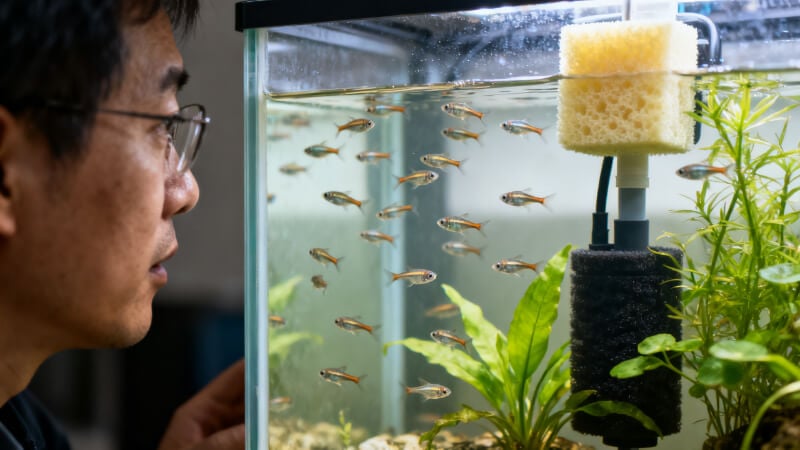
Responsible breeders do not only prepare for the normal batch. They also prepare for the batch that goes better than expected.
That might mean more eggs hatch, more fry survive, or fewer juveniles are eaten by adult fish.
A successful spawn can become a welfare problem if the tank, filter, and feeding routine cannot keep up.
If your breeding results change a lot from one spawn to another, checking the variance in spawn sizes can help you decide how much backup space you need before breeding again.
For example, if your guppy fry survival is usually modest but occasionally jumps much higher, you should not plan only for the smaller result. You should have a backup plan for the larger one, too.
Turn the estimate into a real tank plan
Once you have a rough idea of possible population growth, turn it into action.
- First, check whether you need a separate nursery or grow-out tank. Fry may need gentle filtration, such as a sponge filter, so they are not pulled into the intake. They may also need fine food, frequent small feedings, and hiding places.
- Second, think about water quality. More fish means more waste. MSD Veterinary Manual identifies low dissolved oxygen and high ammonia as two water quality issues most likely to directly kill fish, and notes that water quality needs depend on the system, species, and stocking density.
- Third, plan for maintenance. More young fish may require more frequent water testing, careful feeding, removal of uneaten food, and regular water changes. FAO hatchery guidance also notes that proper water circulation helps prevent food particles, dead animals, feces, and other material from settling and decomposing in culture tanks, where harmful conditions can develop.
- Fourth, decide what will happen to the juveniles. Will you keep them? Sell them? Give them to experienced keepers? Ask a local aquarium shop before you rely on them. Not every store accepts home-bred fish, and some species are hard to rehome.
Know when to pause breeding
Sometimes the most responsible choice is to stop breeding for a while.
Pause breeding if:
- you are running out of tank space;
- water quality is becoming harder to control;
- juveniles are growing faster than expected;
- males and females cannot be separated;
- you do not have confirmed rehoming options;
- aggression or stress is increasing;
- fry are surviving, but not growing well.
This is not failure. It is good fishkeeping.
For livebearers, separating males and females may be necessary. For egg layers, removing breeding triggers or separating pairs may help. For snails or shrimp, reducing excess food and managing population carefully can slow growth.
The right method depends on the species, but the principle is the same: do not create more animals than you can responsibly care for.
Final thoughts
Breeding aquarium fish should be planned, not accidental. A responsible fishkeeper thinks beyond the excitement of new fry and asks what the tank will look like one week, one month, and three months later.
Good planning does not need to be complicated. Learn the species, keep a simple log, think of possible outcomes, prepare for larger batches, and have a rehoming plan before the tank becomes crowded.
That way, breeding remains what it should be: a healthy, rewarding part of fishkeeping, not a source of stress for you or your fish.
FAQ’s
How do I prevent overcrowding when breeding aquarium fish?
Prevent overcrowding by planning tank space, filtration capacity, and rehoming options before breeding. Tracking fry survival and keeping a breeding log helps manage population growth responsibly.
Do all aquarium fish reproduce quickly in home tanks?
No. Some species reproduce frequently, while others breed rarely. Livebearers like guppies may produce many fry, while other fish require specific conditions to spawn successfully.
Should beginner aquarists try breeding fish right away?
Beginners should first ensure stable water quality and adequate tank space. Breeding adds extra waste, feeding demands, and population growth that require careful planning.